The Story of Aziz
For fifteen years Azizullah Aziz walked into Afghan villages ahead of American units. In 2021 the country he had helped defend fell back under the control of the Taliban. He got out and then stayed to build the thing that would have helped him.
For more than fifteen years, Azizullah Aziz worked for the United States Special Operations community in Afghanistan. Interpreter is the word on the paperwork. In practice the job was wider: facilitator, cultural advisor, the man who read the room before anyone else stepped into it.
He went out on missions in every part of the country, including all eight of Force Recon Marine Chad Robichaux's deployments with a Joint Special Operations Command task force.
An interpreter translates. Aziz did more than that. He knew the language, the people, and the ground, and more than once that knowledge is the reason Robichaux came home. The Americans he served with stopped calling him an interpreter. They called him a teammate, and then a brother.
When the United States withdrew and the Taliban retook the country in a matter of days, the record of Aziz's service became the most dangerous thing about him. Interpreters were on lists. So were their families.
He moved his wife and children from place to place. He could not go to friends. He could not go to relatives — arriving at their door would have put them on the same list. The family lived in other people's houses in short stays, looking for a way out of a country that no longer had exits for men like him.
Half a world away, a Marine he had gone out with eight times started making calls.
Chad Robichaux went to get him. What began as one man's promise to one friend turned into something far larger. With Mighty Oaks Foundation, Save Our Allies, veterans, donors, and partners around the world, the team evacuated and relocated more than 17,000 people — American citizens, Afghan allies, women, children, and families the Taliban had marked.
Aziz and his family reached safety. They completed the Special Immigrant Visa process. They started again in the United States with the paperwork of a legal arrival and none of the things that make a place a home.
The account of that rescue is a book: the Wall Street Journal bestseller Saving Aziz.
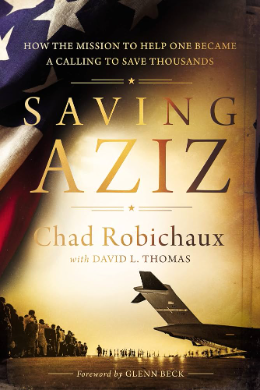
Chad Robichaux's account of the mission to get one interpreter out, and of the thousands it grew to include. A Wall Street Journal bestseller.
Get a copyAziz knows what the first year in America costs, because he paid it. Federal resettlement support runs about ninety days. Then the phone stops ringing.
He built Kindness in Action Charity to be the thing that was not there — a bridge between Afghan ally families and the Americans who want to welcome them. The work is unglamorous and specific. Rent and groceries in the weeks the money runs out. English. How a lease works, how a clinic works, how to read the letter from the school.
And a team of neighbors who commit to twelve months instead of twelve weeks. Aziz speaks Pashto and Dari with the families, and English with the people learning their names.
Aziz was carried out of Afghanistan by people who refused to leave him behind. He runs KIAC on the same principle, in the other direction — telling families the thing he once needed to hear: you have not been forgotten.