We exist to answer the call nobody else was answering.
An Afghan ally family lands in the United States with a suitcase, a caseworker for ninety days, and no one who knows their name. Then the ninety days end. Who walks with this family for the next twelve months?
Kindness in Action Charity is the answer to that question. We recruit American sponsor teams, train and vet them, match them with an ally household, and stay in it with both sides for a full year.
How the Walk worksFour commitments, made in advance
Not values on a wall. These are the rules we hold ourselves to, and the ones a family can hold us to.
A file gets processed. A neighbor gets known. Matched with people who live nearby and stay after the paperwork.
Sponsor teams sign for a year, not a weekend. We would rather match fewer families than shorten the promise.
Language, faith, work, school. The household sets the goals, and nothing is conditional on how a family prays.
Match counts, dollars per family, what worked and what did not — published as we go, including the short years.
Started by an ally, run by a community.
KIAC is deliberately small. Staff carry the case. Trained neighbors carry the relationship.
Azizullah Aziz spent over a decade as an interpreter alongside U.S. forces in Afghanistan. In 2021 he was carried out of Kabul by American volunteers who had no obligation to come for him. He landed in Houston, and then watched hundreds of families arrive the same way he had — legally, with the right paperwork, and with no one waiting at the other end.
He started KIAC because the ninety-day resettlement window is not a life. The organization runs on the same math that got him out: a small number of Americans who decide one family is their responsibility.
Read Aziz's full story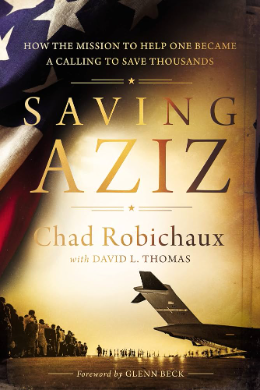
Chad Robichaux's account of the mission to get one interpreter out, and of the thousands it grew to include. A Wall Street Journal bestseller.
Get a copyThree pillars, one on-ramp.
Each pillar feeds the next. Most families meet us at a hub event and end up in a Walk.
Rent help, groceries, medical navigation, interpretation, school enrollment. The immediate things, handled fast, in Pashto and Dari.
Get helpOne-day gatherings in donated church space: 20–40 families, a hot meal, childcare, referral tables, and a soft introduction to a sponsor team.
Hub eventsTwelve months. One ally family, one team of four to eight Americans, one staff case lead. Rent, rides, English, work, friendship.
Sponsor a familyThe people accountable.
A working board. They approve the budget, review program results, and answer for the results.
Interpreter alongside U.S. forces for over a decade. Evacuated from Kabul in 2021. Speaks Pashto, Dari, and English.
Former Force Recon Marine and Afghanistan veteran. Author of Saving Aziz. Led the team that got Aziz and his family out.
Marine infantry officer turned pastor & CEO of Mighty Oaks. Two decades building veteran and family support programs at national scale.
Recruiting a director with nonprofit finance and audit experience.
Reserved for a member of the Houston Afghan community.
Where the money goes, and who checks.
KIAC is new. Some of these lines are still blank, and we would rather show them blank than not show them.
Pick the way
you can show up.
Four doors, one promise. Every one of them gives a family real support that they need to get their feet under them.
Give monthly
Recurring gifts are what let us promise a family twelve months instead of twelve weeks.
Walk with
a family
Build a sponsor team of four to eight people. Twelve months, real relationship, full training and a staff case lead.
Partner
your church
One congregation can carry three to five families. We bring the playbook, the vetting, and the on-ramp events.
Mentor as
a veteran
If you served with them, you already speak the language. Peer mentors are matched one-to-one with ally fathers and mothers.